
Mario Delgado Highlights SEP’s Involvement in FILIJ
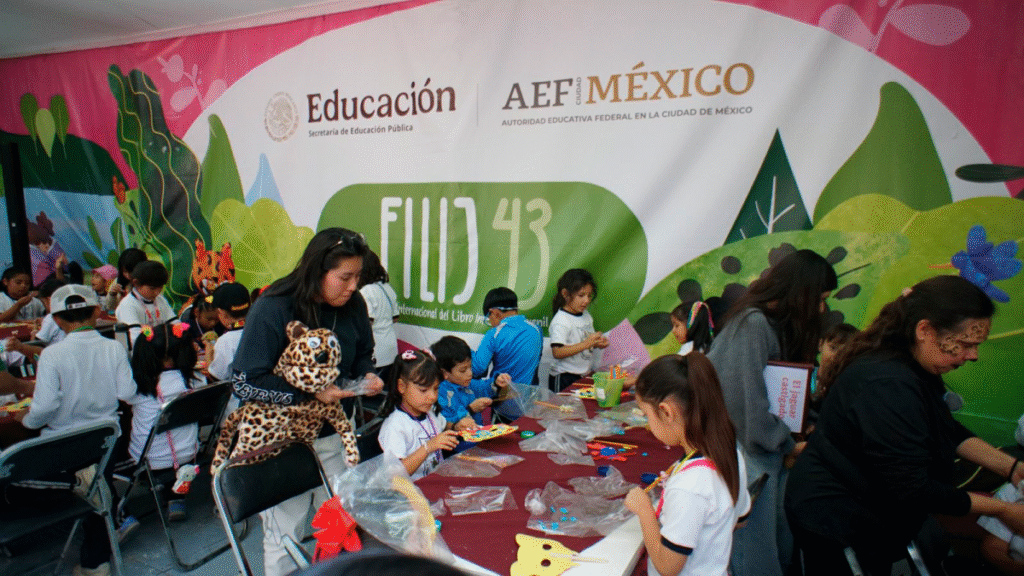
The Secretaría de Educación Pública (SEP), through the Federal Education Authority in Mexico City (AEFCM), actively participates in the 43rd International Children’s and Youth Book Fair (FILIJ) with a wide range of 110 activities targeted at children, adolescents, and young adults, according to SEP’s head, Mario Delgado Carrillo.
The FILIJ, taking place until November 17 at the Chapultepec Forest, is one of the most significant platforms where AEFCM fosters reading and cultural promotion among students in Mexico City.
FILIJ Activities and Participants
- Visitors can enjoy book presentations, workshops, talks, concerts by AEFCM’s orchestras, choral ensembles, storytelling sessions, and various artistic and educational activities at stand 73.
- The event features over 1,670 activities with the participation of 77 publishing houses.
AEFCM’s Commitment to Cultural and Literary Development
Delgado Carrillo emphasized that among the 100 commitments assumed by President Claudia Sheinbaum Pardo is the impulse and promotion of a cultural and reading republic for all Mexicans.
During the FILIJ inauguration, AEFCM head Luciano Concheiro Bórquez, alongside Fondo de Cultura Económica (FCE) General Director Paco Ignacio Taibo II, highlighted that reading is a tool to imagine and transform the world. They also encouraged young people to make reading a daily, meaningful practice.
“Reading should not be an obligation but a free, fun, and meaningful choice. Books do not end when the last page is closed; they stay with us, transform us, and accompany us always,” Concheiro Bórquez expressed to the audience.
School Community Participates in National Peace Day and Anti-Addiction Campaign
At the Secondary School No. 24 “Felipe Carrillo Puerto” in Mexico City’s Venustiano Carranza alcaldía, students, parents, families, and teachers engaged in the third National Peace Day and Anti-Addiction Campaign. They conducted artistic, cultural, sports, and pedagogical activities.
Importance of the National Peace Strategy
AEFCM head Luciano Concheiro Bórquez, accompanied by SEP’s Deputy Secretary for Middle-Level Education Noemí Juárez Pérez, underscored the significance of this national strategy that integrates all educational levels—from basic to higher education—under the integral vision promoted by Mexico’s President, who has emphasized that education should be the fundamental axis of social transformation through the New Mexican School (NEM).
Concheiro Bórquez stressed the importance of establishing a humanist, inclusive, and community-oriented education that shapes young people not only in knowledge but also in the values of peace, solidarity, and reciprocity.
The National Peace Day and Anti-Addiction Campaign are part of a state policy aimed at strengthening social ties, promoting healthy habits, and fostering critical reflection on the impact of addictions on individuals and communities. Through activities like games, workshops, and artistic expressions, the campaign encourages body awareness, harmonious coexistence, and building a peaceful future based on collective well-being.
Key Questions and Answers
- What is the event? The Secretaría de Educación Pública (SEP) participates in the 43rd International Children’s and Youth Book Fair (FILIJ) through the Federal Education Authority in Mexico City (AEFCM).
- What are the activities at FILIJ? Over 1,670 activities, including book presentations, workshops, talks, concerts, storytelling sessions, and artistic expressions, are offered at stand 73.
- Who are the key figures involved? Mario Delgado Carrillo (SEP’s head), Luciano Concheiro Bórquez (AEFCM’s head), and Paco Ignacio Taibo II (FCE’s General Director) are central to this event.
- What is the significance of the National Peace Day and Anti-Addiction Campaign? This campaign, led by AEFCM under SEP’s guidance, aims to strengthen social bonds, promote healthy habits, and encourage critical thinking about addiction’s impact on individuals and communities.




