
Background and Context
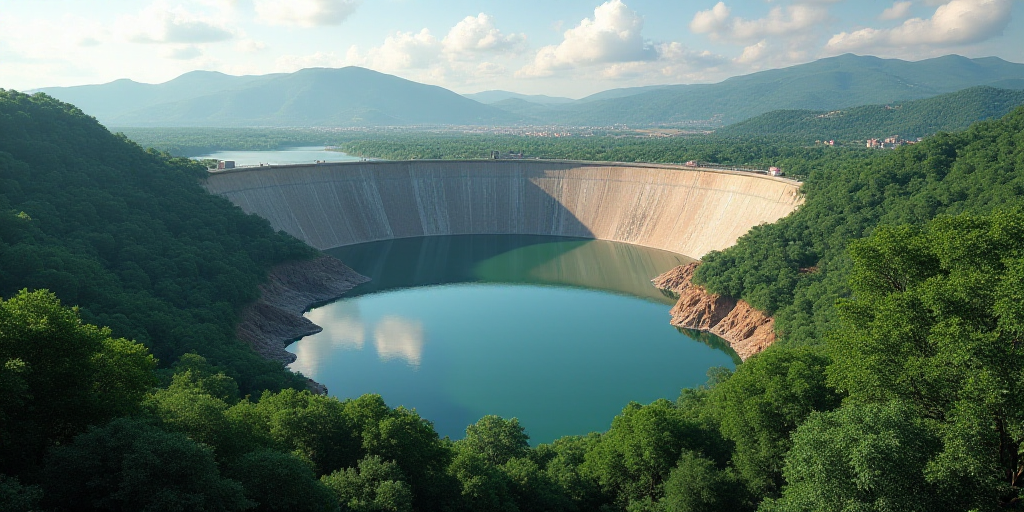
The Mexican states of Chihuahua, Tamaulipas, Nuevo León, Sonora, Coahuila, and Baja California are experiencing a severe drought, impacting water availability for both local communities and the two international reservoirs, Falcón and Amistad. These reservoirs rely on water from at least six monitored dams, which are currently facing critical low water levels.
Who is Affected?
The dams in question are crucial for supplying water to the Falcón and Amistad reservoirs, which serve not only local populations but also fulfill obligations under a water treaty with the United States. The current drought situation puts pressure on negotiations to settle a debt of over 800,000 million cubic meters.
Relevant Parties
The Comisión Internacional de Límites y Aguas (CILA) and the Comisión Nacional del Agua (Conagua) are key organizations involved in monitoring water levels and negotiating water deliveries. Claudia Sheinbaum, the President of Mexico City, has been actively engaged in discussions with these bodies to finalize the water delivery plan.
Current Situation
Dam Levels:
- As of January 26, 2026, dam levels ranged from 72.34% (Pico del Águila, Coahuila) to 12.74% (Venustiano Carranza, Coahuila).
- Specific dams with lower capacities include San Gabriel (40.69%), El Rejón (42.25%), Luis L. León (43%), and Centenario (27.5%) in Coahuila.
- However, Pico del Águila (69.45%), Francisco I. Madero (66.18%), and San Miguel (Coahuila, 63.79%) surpassed the 60% threshold.
International Reservoirs:
- The Falcón reservoir held 10.7% of its capacity, while Amistad contained 24.8%.
Drought Severity:
According to the Monitor of Drought in Mexico, as of January 15, 2026, 51.8% of the Rio Bravo region experienced conditions ranging from abnormally dry (D0) to exceptional drought (D4). This highlights the severity of the ongoing drought in the border region.
Historical Perspective
Worsening Drought Conditions:
Historical data shows that drought conditions have worsened since 2020. That year, 29.7% of the Rio Bravo-managed territory experienced drought conditions.
Current State of Affected Regions:
- Coahuila leads with 51.1% of its territory affected by drought, including 20.5% experiencing severe drought (D2) and 2.9% facing extreme drought (D3).
- Tabasco followed with 45.5%, Sinaloa with 37.1%, Nuevo León with 29.7%, and Tamaulipas with 29.5%.
Impact of Recent Rainfall:
Although above-average rainfall occurred in northern Mexico during the first half of January 2026, associated with cold fronts and the second winter storm, these precipitations only marginally reduced moderate and severe drought areas without reversing the accumulated stress on the basin.
Key Questions and Answers
- Q: How many dams are below 50% capacity? A: At least six of the eleven monitored dams are below 50% capacity.
- Q: What is the current drought situation in Mexico? A: 7.4% of Mexico’s territory experiences moderate to exceptional drought (D1-D4), which is an improvement from 40% the previous year.
- Q: Which states are most affected by drought? A: Coahuila is the most affected state, with 51.1% of its territory experiencing drought conditions.
- Q: What role do the international reservoirs play? A: The Falcón and Amistad reservoirs supply water to both local communities and fulfill obligations under a U.S. water treaty.




