
Background on Key Figures and Relevance
The recent pressure exerted by the United States, under President Donald Trump’s administration, on Mexico to accelerate water deliveries according to the 1944 International Treaty has raised concerns among agricultural producers and experts. This situation is particularly relevant due to the ongoing drought, weakened institutions, and historical water-related conflicts between the two nations.
Key figures in this discussion include:
- Eduardo Vázquez: Director of Agua Capital, who emphasizes the dual obligations under the treaty and the need for better planning and efficiency in water infrastructure.
- Raúl Rodríguez Márquez: President of the Water Advisory Council, who suggests that US pressure is more politically and commercially motivated rather than driven by genuine water concerns.
- José Antonio Cortés Lara: Researcher at El Colegio de la Frontera Norte, who clarifies that water delivery shortfalls do not constitute a treaty violation due to the bilateral framework’s flexibility.
- Hugo Rojas: Former director of the National Association of Water and Sanitation Companies, who points out the insufficient water storage capacity in international reservoirs.
Complex Hydrological Scenario in Mexico
Experts have highlighted a complicated hydrological situation in Mexico, marked by:
- Delayed fulfillment of treaty obligations
- Underutilized infrastructure
- Contamination of water sources
- Persistent megadrought in northern Mexico and southern US
Eduardo Vázquez from Agua Capital explained that the treaty imposes dual responsibilities on both countries, with Mexico obligated to deliver one-third of the Rio Bravo’s water. However, he acknowledged that inefficiencies and lack of planning have led to increasingly significant delivery volumes by 2030.
Raúl Rodríguez Márquez believes that US pressure aims to strengthen or renegotiate the treaty, despite its being “100% beneficial for Mexico.” José Antonio Cortés Lara from El Colegio de la Frontera Norte clarified that treaty shortfalls can be regularized in the following cycle, without violating the agreement.
Water Storage and Delivery Challenges
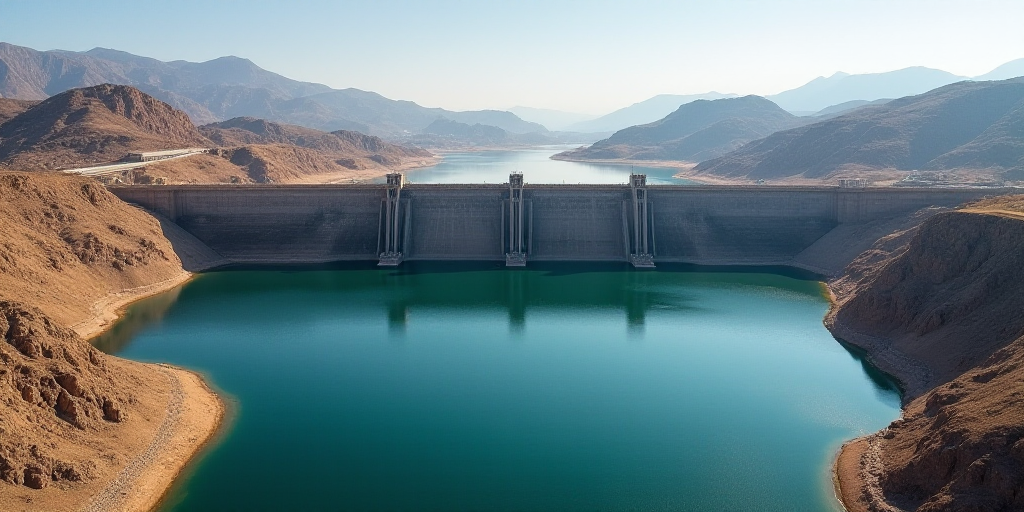
Hugo Rojas, the former director of the National Association of Water and Sanitation Companies, pointed out that international reservoirs like La Amistad and Falcón only store around 200 million cubic meters of water, far below the required amount. He emphasized that an additional water volume simply does not exist.
Key Questions and Answers
- What is the main issue? The primary concern revolves around the US pressure on Mexico to accelerate water deliveries according to the 1944 International Treaty amidst a complex hydrological scenario, ongoing drought, and weakened institutions.
- Who are the key figures involved? Eduardo Vázquez (Agua Capital), Raúl Rodríguez Márquez (Water Advisory Council), José Antonio Cortés Lara (El Colegio de la Frontera Norte), and Hugo Rojas (former director of the National Association of Water and Sanitation Companies) are central to this discussion.
- What are the challenges in Mexico’s hydrological situation? The country faces delayed treaty fulfillment, underutilized infrastructure, contaminated water sources, and a persistent megadrought in northern Mexico and southern US.
- How do experts view the US pressure? Raúl Rodríguez Márquez suggests that the pressure is more politically and commercially motivated, while José Antonio Cortés Lara clarifies that treaty shortfalls can be regularized without violating the agreement.
- What are the water storage and delivery issues? International reservoirs in Mexico store insufficient water, around 200 million cubic meters, which is far below the required amount, according to Hugo Rojas.




