
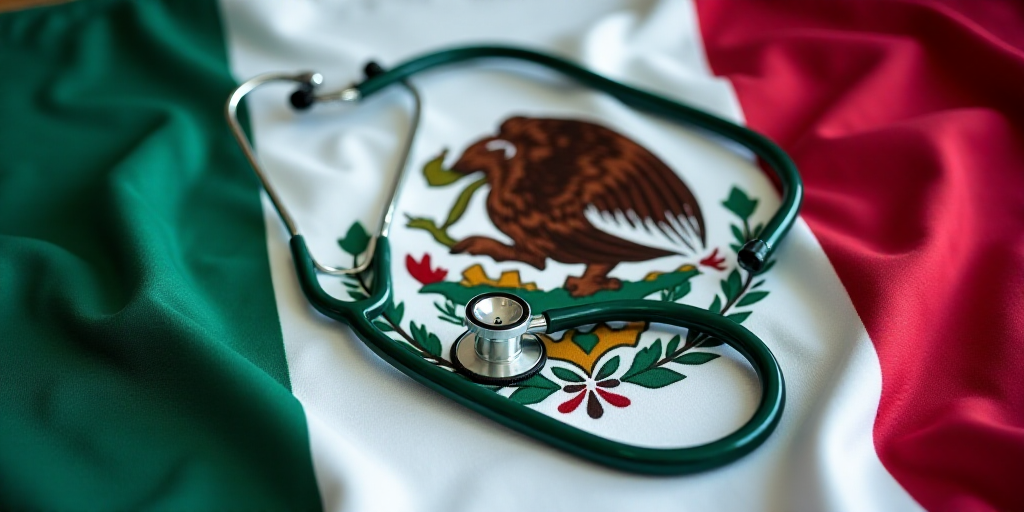
The federal government is set to commence the credentialing process for the Universal Health Service, aiming to integrate and digitize public medical care across Mexico. The registration will be phased and conclude by December 2026.
Who is Claudia Sheinbaum and Why is This Relevant?
Claudia Sheinbaum, the President of Mexico City, announced the start of this credentialing process for the Universal Health Service. This initiative is crucial in advancing towards a universal, free, and interoperable medical care system in Mexico. The registration will kick off in March 2026 and proceed gradually until December of the same year, with an estimated investment of 3,500 million pesos.
What is the Universal Health Service Credential?
The Universal Health Service Credential will identify each individual within the public health system and link them to a single clinical record. Its purpose is to streamline access to medical services in institutions such as the IMSS, ISSSTE, IMSS-Bienestar, state services, national health institutes, Pemex hospitals, and armed forces hospitals, irrespective of original affiliation or place of residence.
Key Requirements for Registration
- Birth certificate with CURP (Unique Registry of Population)
- Official identification of the guardian (for minors)
- Proof of residence
Benefits for Patients
The credentialing process will enable a single medical record, even if an individual changes jobs, affiliations, or residences. This will decrease the duplication of clinical studies, enhance medical decision-making, and optimize public resource usage.
Furthermore, it will establish the foundation for a ‘compensation camera’ system, allowing one institution to digitally bill another for attending patients not originally affiliated with them, without affecting their budget.
Towards a Universal Health System
President Claudia Sheinbaum emphasized that medical care will continue according to each person’s current affiliation throughout 2026. However, she reminded that emergencies should be addressed in any institution, regardless of residency rights.
Sheinbaum described the health system’s digitalization as a fundamental step to ensure the constitutional right to health. She assured that universalization will gradually solidify between 2026 and 2030 with increased infrastructure, personnel, and resources.
Key Questions and Answers
- What is the Universal Health Service Credential? It’s a digital identification tool linking individuals to their unique clinical records across various public health institutions.
- When does the registration begin? The process starts in March 2026 and concludes by December 2026.
- What documents are required for registration? A birth certificate with CURP, official guardian identification (for minors), and proof of residence.
- What benefits will patients experience? Reduced duplication of clinical studies, improved medical decision-making, and optimized public resource usage.
- How will this move towards a universal health system? Gradually, between 2026 and 2030, with enhancements in infrastructure, personnel, and resources.




