
AI Integration in Higher Education: A Growing Trend
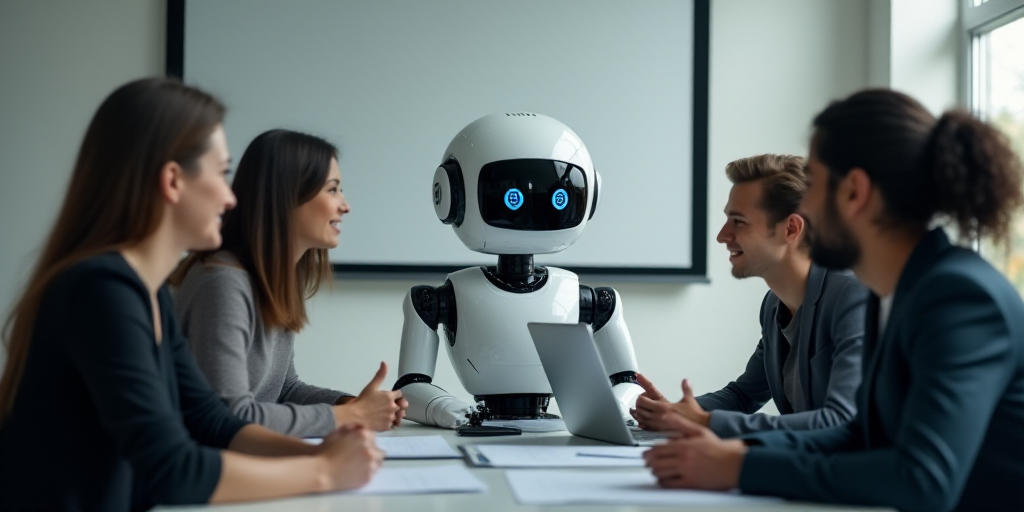
Almost unnoticed, scenes like this are becoming commonplace in university corridors: two professors engaged in animated conversation about integrating a chatbot into their finance courses. This type of dialogue, once reserved for technology specialists, is now part of daily life at the Tecnológico de Monterrey and many other universities worldwide.
Universities Tailoring AI to Their Educational Ecosystem
Each institution, with its unique identity and philosophy, has started incorporating artificial intelligence into their educational ecosystem. While recognizing the immense potential of this technology, universities proceed cautiously, acknowledging risks and the need for clear ethical principles.
International Examples Illustrate This Process
The University of Michigan has developed MiMaizey, a customized assistant offering guidance and support to students based on institutional information. Students can clarify doubts about assignments, deadlines, or class resources.
Though launched as a beta version, initial results show positive evaluations from both teachers and students who appreciate its ability to personalize interaction and reduce administrative barriers in learning.
Meanwhile, the University of California Riverside has experimented with NotebookLM, a tool that enables students to debate based on their readings, fostering idea comparison and critical reasoning. Through interaction with the assistant, students refine their arguments and develop reflective thinking—a contemporary version of the Socratic method enhanced by AI.
Concerns and Ethical Guidelines
Alongside best practices, legitimate concerns have emerged about the unethical use of AI or excessive reliance on these tools. In response, many universities have started developing guidelines and responsible use frameworks, recognizing that AI is not a fleeting trend but a transformative element in current jobs and our understanding of professional practice.
These efforts aim to create secure spaces for AI experimentation under controlled conditions. However, the challenge extends beyond technological adoption: it involves redefining the role of universities.
Universities must evolve from knowledge guardians to mediators between human and artificial intelligence, learning to converse with AI, understand its biases, and harness it to amplify our creative, ethical, and cognitive abilities.
In the coming years—perhaps months—universities will not only use AI more intensively but also learn to understand it. This journey offers the opportunity to strengthen professional competencies, ethics, innovation, and critical thinking, enabling us to leverage this technology for learning and the common good.
Key Questions and Answers
- What is the main trend in higher education? Universities are increasingly integrating artificial intelligence into their educational ecosystems, aiming to enrich learning experiences and strengthen disciplinary competencies.
- Why are universities cautious about AI integration? They recognize the technology’s potential but also acknowledge risks and the need for clear ethical principles.
- What are some examples of AI use in higher education? The University of Michigan’s MiMaizey offers personalized student support, while the University of California Riverside’s NotebookLM promotes critical thinking through AI-powered debates.
- What concerns have emerged regarding AI in education? There are legitimate worries about unethical AI use and excessive reliance on these tools.
- How are universities addressing these concerns? Many institutions have started developing guidelines and responsible use frameworks for AI.
- What is the ultimate goal of universities in embracing AI? To understand and harness AI for enhancing creative, ethical, and cognitive abilities in learning and professional practice.




