
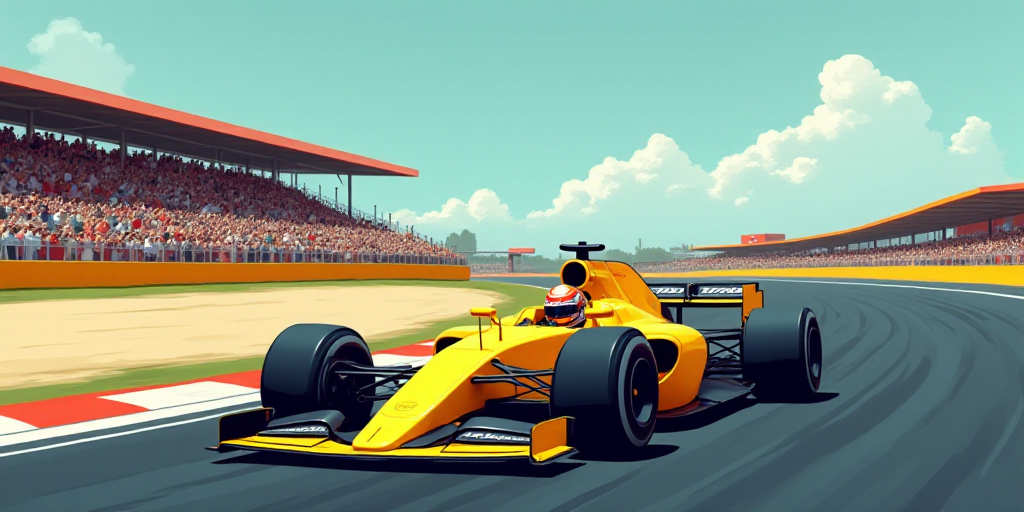
F1’s New Era: Embracing Innovation and Sustainability
Formula 1 (F1), owned by Liberty Media, has announced a revised terminology to accompany the introduction of new engines and what they claim to be the most comprehensive technical rulebook overhaul ever. This change signifies a shift towards more sustainable and innovative racing.
Thinner, Lighter Cars with Narrower Tires
The new F1 cars will be slimmer and lighter, featuring narrower tires. Power distribution will be split equally between internal combustion engines using sustainable fuel and electric power. According to F1, this new generation places more decision-making responsibility on the drivers regarding energy deployment, regeneration, and conservation.
Key New Terms Explained
- Overtake Mode: This replaces the Drag Reduction System (DRS), which provided an extra burst of speed to overtake rivals within one second. Overtake Mode can be used once or throughout a lap.
- Boost Mode: This is an energy deployment activated by the driver, used for both attacking and defending. It provides maximum engine and battery power with a single button press, regardless of the track position.
- Active Aero: This refers to movable front and rear wing elements with curve and straight-line modes. F1 claims it allows for strategic adaptability, maximizing the car’s total power through enhanced grip on the track.
- Recharge: This term describes opportunities for drivers to recharge the car’s battery using “recovered energy from braking, lifting off the accelerator at the end of straights, and even in corners where only partial power is applied.”
Why These Changes Matter
These changes aim to make racing more dynamic and strategic, empowering drivers with greater control over their cars’ performance. The new terms reflect F1’s commitment to sustainability, as the series transitions towards hybrid powertrains. By engaging fans with innovative concepts, F1 seeks to deepen appreciation for drivers’ skills and tactical prowess on the track.
Who is Formula 1, and Why Should We Care?
Formula 1 is the pinnacle of motorsport, featuring the world’s most talented drivers and cutting-edge technology. Owned by Liberty Media, F1 has a global audience of millions and serves as a proving ground for automotive advancements. With its ongoing evolution, F1 remains relevant by embracing sustainability and technological innovation, ensuring its position as a leading platform for motorsport enthusiasts worldwide.
Key Questions and Answers
- What is the Drag Reduction System (DRS)? DRS was a strategic tool that gave drivers an extra speed burst to overtake rivals within one second. It is being replaced by Overtake Mode in the 2026 season.
- How does Boost Mode work? Boost Mode is an energy deployment activated by the driver, providing maximum engine and battery power with a single button press. It can be used for both attacking and defending.
- What does Active Aero entail? Active Aero refers to movable front and rear wing elements with curve and straight-line modes, allowing for strategic adaptability and maximizing the car’s total power through enhanced grip on the track.
- How can drivers recharge the car’s battery? Drivers can recharge the car’s battery using “recovered energy from braking, lifting off the accelerator at the end of straights, and even in corners where only partial power is applied,” referred to as Recharge.




