
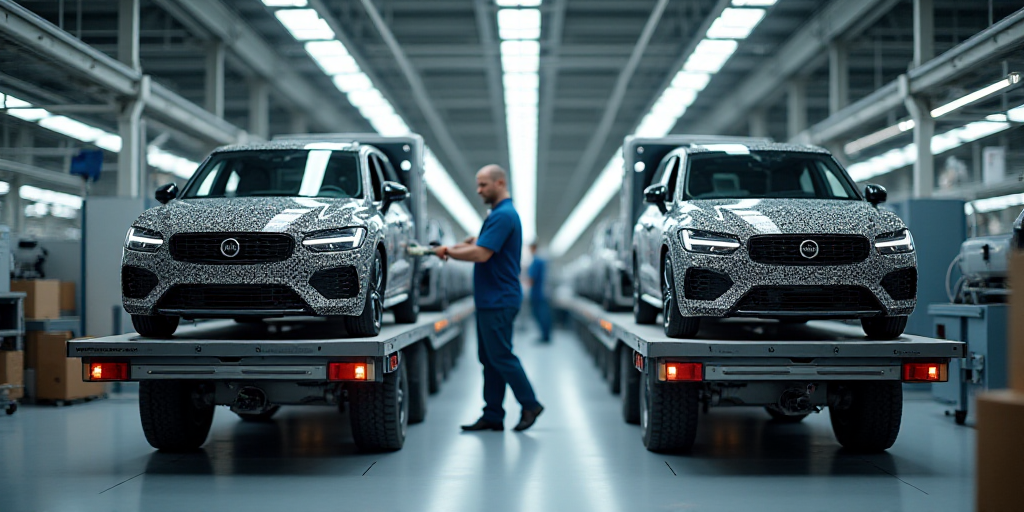
Background on the Automotive Industry and Nearshoring
The automotive industry in Mexico is gearing up for a potential second wave of nearshoring projects by 2027, according to Gabriel Padilla Maya, the General Director of the National Industry of Automotive Parts (INA).
The T-MEC Review and Its Impact
Prior to the review of the Trilateral Agreement between Mexico, the United States, and Canada (T-MEC) scheduled for mid-2023, the Mexican government has conducted consultations that Padilla Maya deems positive. However, he emphasizes the importance of maintaining collaboration between government and industry.
Nearshoring 2.0: A New Phase for the Automotive Sector
“We believe that technology should be the new driving force once we move past tariff negotiations and the T-MEC review,” Padilla Maya stated. “We project that, starting in 2027, Mexico could receive a second wave of projects, which we call ‘nearshoring 2.0’.”
Uncertainty and Preparation for the Future
Despite the complex and uncertain climate for 2026 planning, Padilla Maya clarified that no investments have been canceled, but some projects are awaiting the direction of tariff negotiations and the T-MEC review.
Collaboration Between Government and Industry
Padilla Maya stressed the need for continued collaboration between government and industry to ensure a successful negotiation outcome that recognizes Mexico’s negotiating capacity. He emphasized the importance of joint work, primarily with the Secretary of Economy and the industry.
Anticipating U.S. Position
The automotive industry eagerly awaits the initial positioning statement from the United States in early 2026, as required by law for the U.S. to present its stance to Congress. This early knowledge will enable Mexico to prepare for accompanying the government in this crucial negotiation, which remains central to the automotive sector’s role in the trilateral agreement.
Strengthening National Capabilities
Padilla Maya also highlighted the necessity of enhancing Mexico’s capabilities in mold and die production, an essential industry for automotive parts. This strategy aims to boost regional content value.
Historical Context and Investment Trends
From 2006 to 2024, Mexico has attracted $99.669 billion in foreign direct investment in the automotive sector, with the states of Chihuahua, Guanajuato, and Nuevo León receiving the most investments, according to data from the Secretaría de Economía.
- 53% of accumulated capital during this period went to the automotive parts industry.
- 44% was invested in light vehicles.
- 3% was allocated to heavy vehicles.
Key Questions and Answers
- What is nearshoring 2.0? Nearshoring 2.0 refers to the anticipated second wave of projects in the automotive sector by 2027, driven primarily by technological advancements.
- Why is collaboration between government and industry crucial? Maintaining a strong partnership ensures that Mexico’s negotiating capacity is recognized, leading to a successful outcome in the T-MEC review negotiations.
- What is the significance of knowing the U.S. position early? Early knowledge of the U.S. stance allows Mexico to prepare for accompanying the government in crucial negotiations, ensuring the automotive sector’s continued central role in the trilateral agreement.
- Why is enhancing national capabilities important? Strengthening Mexico’s mold and die production capabilities will boost regional content value, making the automotive sector more competitive.




