
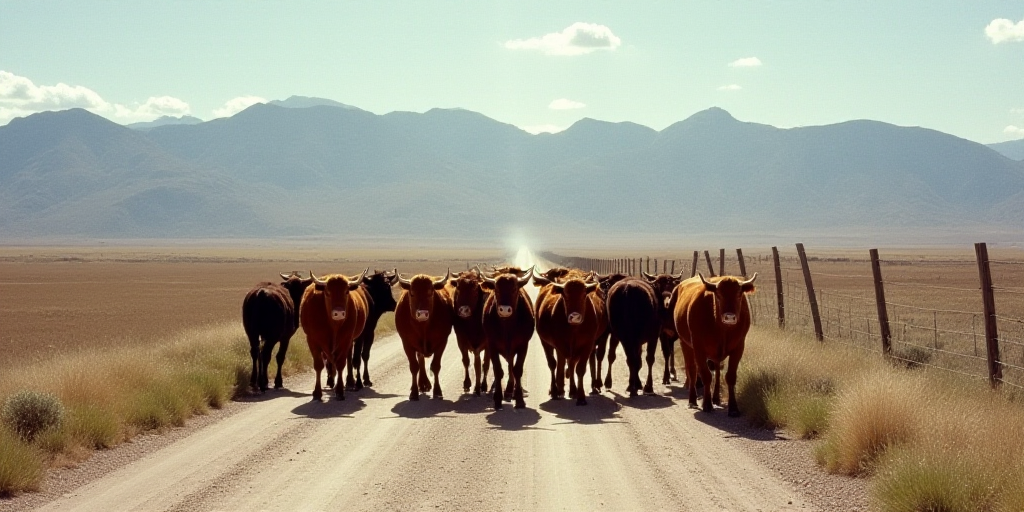
Background on the Situation in Jalisco’s Cattle Industry
Guadalajara, Jalisco. After two years of severe drought and cattle sales by local producers, Jalisco’s cattle industry faces a dual-faceted scenario. While rising cattle prices signal a sector recovery, factors like the spread of the gusano barrenador parasite and excessive imports of foreign cattle and meat threaten to reverse this upswing, according to Antonio Ruelas, president of the Regional Cattle Union of Jalisco (UGREJ) in an interview with El Economista.
Gusano Barrenador Parasite Threat
Ruelas warned that due to the lack of federal government action, the gusano barrenador parasite, which crossed from Central America with confirmed cases in several states, could soon reach western Mexico. He stated that although Jalisco has taken necessary zoosanitary measures, the risk remains imminent.
- Parasite Spread: The gusano barrenador, which can travel up to 1.9 kilometers per day, can spread not only through cattle but also via wild animals like raccoon dogs, tlacuaches, and deer.
- Preventive Measures: Jalisco has initiated training and preventive protocols, but the urgency to restart the production of “sterile flies” to control the parasite is critical.
- Historical Impact: In the southeast, infected cattle imports led to a temporary closure of the border with the United States, affecting the exportation of up to 1.2 million calves and potentially saturating the national market, driving prices down.
Importation Concerns
Ruelas also raised concerns about excessive cattle imports through the southern border, which not only pose a potential contagion risk but also create market imbalances. Additionally, the entry of over 70,000 tons of meat from Brazil further complicates the situation.
He emphasized that while Brazilian meat enters legally, it lacks proper regulation since there are no established quotas. Ruelas stressed the need for regulation to understand precisely how much meat is entering the market.
Current Situation and Outlook
Despite the threats, Ruelas noted that the productive scenario is stabilizing due to reduced inventories caused by the 2023-2024 drought and producers shifting towards agave cultivation. He expressed optimism, stating that lower inventories tend to push prices up, and upcoming good years are expected.
Interviewed during the Jalisco Cattle Expo 2025 (October 8-31), Ruelas reiterated that breeders showcase genetic improvement advancements to boost sector profitability. Jalisco is a national reference in genetics, exporting embryos and semen to Central America and the United States.
Ruelas highlighted their annual pursuit of more resilient, heavier-at-weaning, and higher milk-producing animals during the expo, which serves as both a platform for “field to city” connection and a reflection point on the challenges facing Mexican cattle farming.




