
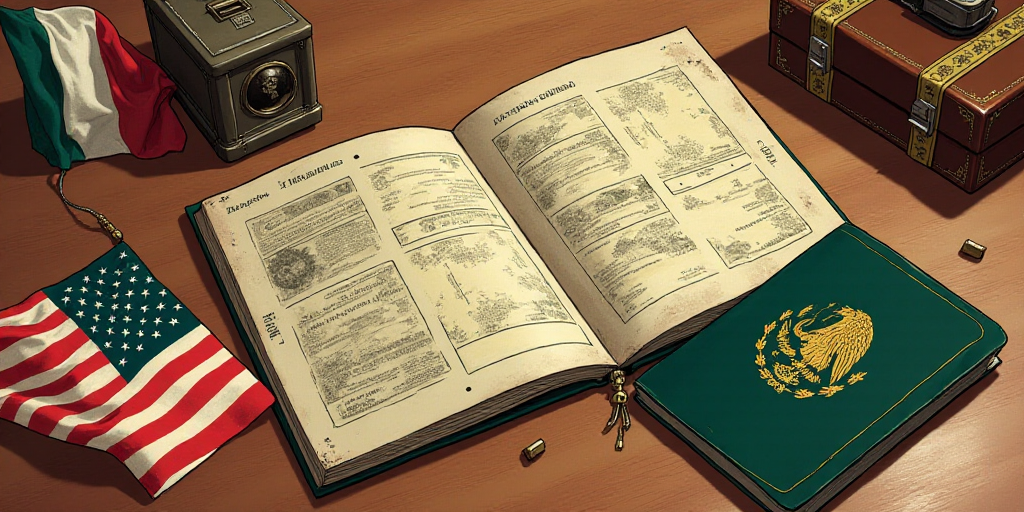
Introduction to the T-MEC and its Significance
The United States-Mexico-Canada Agreement (T-MEC) is a trade agreement between the three North American countries, which replaced the North American Free Trade Agreement (NAFTA) in 2020. The T-MEC aims to promote fair and reciprocal trade, address currency manipulation, and enforce labor rights. Marcelo Ebrard, Mexico’s Secretary of Foreign Relations, recently discussed the future of the T-MEC, highlighting new content additions and its trilateral nature.
Marcelo Ebrard and His Role
Marcelo Ebrard, Mexico’s Secretary of Foreign Relations, is a prominent figure in Mexican politics. Appointed by President Andrés Manuel López Obrador in 2018, Ebrard has been instrumental in shaping Mexico’s foreign policy. His recent comments on the T-MEC indicate his commitment to maintaining a balanced and mutually beneficial trade relationship among the three countries.
Key Discussions with USTR Representative
Ebrard met with Jamieson Greer, the representative of the United States Trade Representative (USTR), to discuss incorporating new content into the T-MEC. These additions are expected to cover critical minerals, rules of origin, and labor regulations.
Critical Minerals
Critical minerals, such as lithium, cobalt, and rare earth elements, are essential for various industries, including clean energy technologies, electronics, and defense. Including these minerals in the T-MEC could foster cooperation among the three countries in securing a stable supply chain and promoting sustainable practices.
Rules of Origin
The rules of origin determine the national source of a product for the purposes of applying preferential tariffs under the T-MEC. By discussing and potentially updating these rules, the three countries can ensure that their industries remain competitive while maintaining the agreement’s original intent of promoting regional trade.
Labor Regulations
Strengthening labor regulations within the T-MEC is crucial for ensuring fair working conditions and wages across North America. By addressing labor standards, the agreement can help prevent a “race to the bottom” in which countries compete by lowering labor costs, potentially harming workers’ rights and living standards.
Impact on Stakeholders
The T-MEC’s new content additions will have significant implications for various stakeholders, including businesses, workers, and environmental advocates. By focusing on critical minerals, updated rules of origin, and labor regulations, the agreement aims to create a more balanced and sustainable trade relationship among the three countries.
Key Questions and Answers
- What is the T-MEC? The United States-Mexico-Canada Agreement (T-MEC) is a trade agreement that replaced the North American Free Trade Agreement (NAFTA) in 2020, aiming to promote fair and reciprocal trade while addressing currency manipulation and enforcing labor rights.
- Who is Marcelo Ebrard? Marcelo Ebrard is Mexico’s Secretary of Foreign Relations, appointed in 2018. He plays a significant role in shaping Mexico’s foreign policy and maintaining balanced trade relationships with the United States and Canada.
- What new content is being considered for the T-MEC? New content additions under consideration include critical minerals, updated rules of origin, and labor regulations.
- How will these new contents impact stakeholders? The proposed changes aim to create a more balanced and sustainable trade relationship, benefiting businesses, workers, and environmental advocates by fostering cooperation in critical minerals, ensuring competitive industries, and promoting fair labor standards.




