
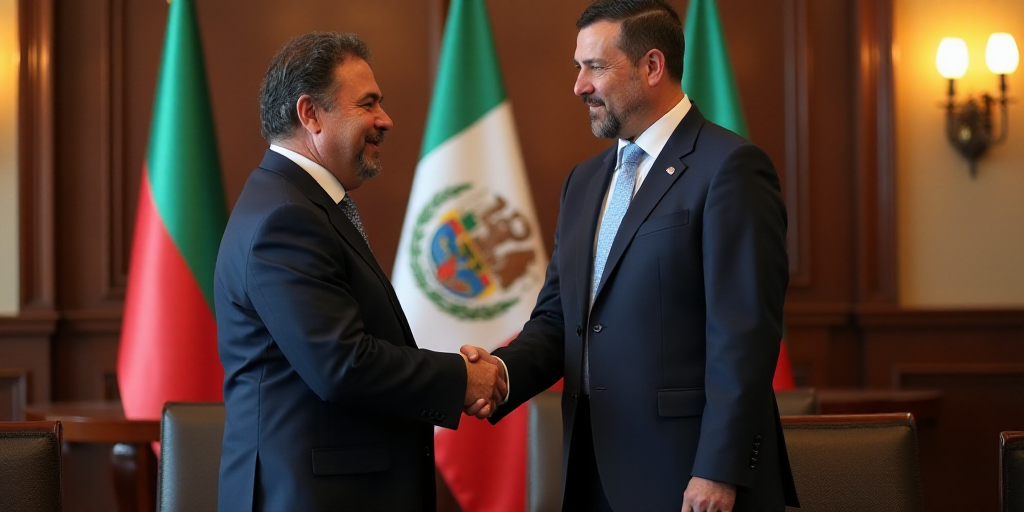
Background on Key Figures and the T-MEC
The United States Trade Representative (USTR), Jamieson Greer, and Mexico’s Secretary of Economy, Marcelo Ebrard, recently agreed to initiate discussions on possible reforms to the United States-Mexico-Canada Agreement (T-MEC). This development is significant as both countries aim to strengthen their economic partnership and address emerging trade issues.
The T-MEC, which entered into force in July 2020, replaced the North American Free Trade Agreement (NAFTA). It aims to promote balanced and sustainable trade, protect workers’ rights, and enforce environmental provisions. With the US, Mexico, and Canada as key trading partners, any reforms to the T-MEC will have substantial implications for North American trade relations.
Who are Jamieson Greer and Marcelo Ebrard?
Jamieson Greer serves as the United States Trade Representative (USTR), a position responsible for developing and implementing US trade policy. Appointed by President Joe Biden, Greer plays a crucial role in shaping international trade agreements and negotiations.
Marcelo Ebrard, Mexico’s Secretary of Economy, is a prominent figure in Mexico’s government. As the head of the Ministry of Economy, Ebrard oversees various economic policies and international trade agreements, including the T-MEC. His collaboration with Greer signifies Mexico’s commitment to maintaining and enhancing its economic ties with the United States.
Key Points of Discussion
The discussions between Greer and Ebrard revolve around potential reforms to the T-MEC. While specific details have not been disclosed, possible areas of focus include:
- Strengthening labor and environmental provisions
- Enhancing digital trade rules
- Addressing supply chain disruptions and resilience
- Promoting regional manufacturing and investment
Impact on North American Trade Relations
Any reforms to the T-MEC will have significant implications for North American trade relations. By addressing emerging issues and adapting to changing global trade dynamics, the US and Mexico aim to maintain a competitive and mutually beneficial economic partnership.
Key Questions and Answers
- What is the T-MEC? The T-MEC is a trade agreement between the United States, Mexico, and Canada that replaced the North American Free Trade Agreement (NAFTA) in July 2020. It aims to promote balanced and sustainable trade, protect workers’ rights, and enforce environmental provisions.
- Who are Jamieson Greer and Marcelo Ebrard? Jamieson Greer is the United States Trade Representative (USTR), responsible for developing and implementing US trade policy. Marcelo Ebrard is Mexico’s Secretary of Economy, overseeing various economic policies and international trade agreements, including the T-MEC.
- What are the potential areas of focus for T-MEC reforms? Possible areas include strengthening labor and environmental provisions, enhancing digital trade rules, addressing supply chain disruptions and resilience, and promoting regional manufacturing and investment.
- How will T-MEC reforms impact North American trade relations? Reforms to the T-MEC will have significant implications for North American trade relations, as they aim to maintain a competitive and mutually beneficial economic partnership by addressing emerging issues and adapting to changing global trade dynamics.




