
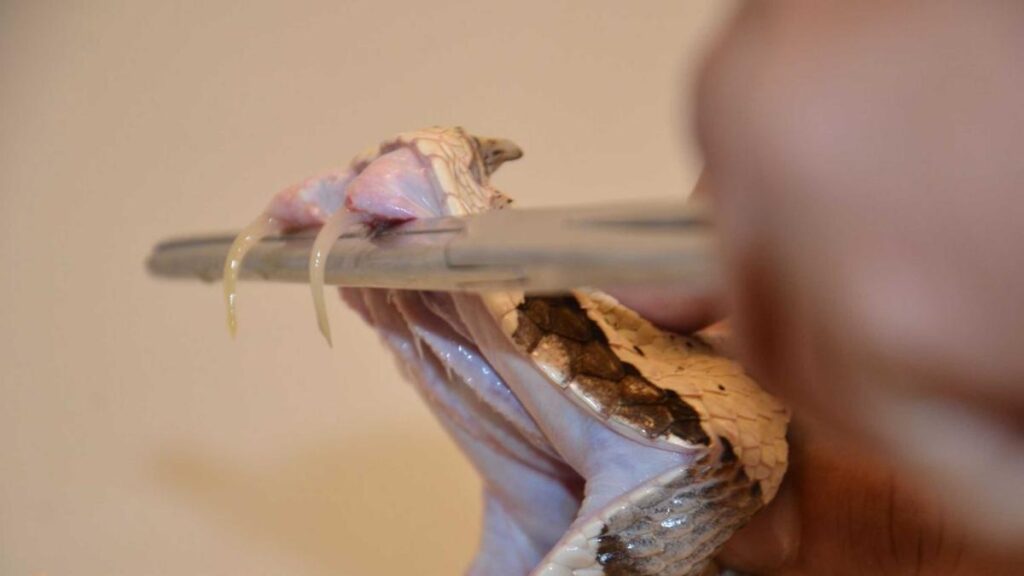
Collaborative Research Published in Nature
Scientists from the National Autonomous University of Mexico (UNAM) have contributed to designing an antivenom against snake bites, which outperforms current products by protecting against some of Africa’s most lethal species: cobras, mambas, and rinkhals.
Edgar Neri Castro, Alejandro Alagón Cano, and master’s student Alid Guadarrama Martínez, along with researchers from the University of Technology in Denmark led by Andreas H. Laustsen, collaborated on this study published in the journal Nature titled “Nanobody-based recombinant antivenom for cobra, mamba and rinkhals bites.” Melisa Benard Valle, a former UNAM graduate student now working in Denmark, also participated in the project.
Addressing a Global Health Issue
According to Edgar Neri Castro, snakebites cause thousands of deaths and disabilities each year, primarily affecting under-resourced communities due to the neglected nature of this problem.
The World Health Organization (WHO) recognizes snakebites as one of the 21 neglected tropical diseases, yet they result in more fatalities than all other untreated disements combined. Each snake species produces a unique toxins mix that targets nerves, tissues, or blood, complicating the development of an effective treatment for all species due to venom diversity.
These challenges lead to limited antivenoms due to batch variations, adverse effects, and insufficient coverage of snake species.
Advantages Over Traditional Antidotes
The new antivenom is based on nanobodies, laboratory-designed and enhanced antibodies derived from alpacas and llamas. This approach surpasses traditional antidotes by preventing cell and tissue destruction in animal models, avoiding death, and reducing local necrosis—a lesser-known effect of snakebites often overlooked in medications.
In the future, mass production of this antidote can be achieved without animal involvement since it was developed in a lab setting. This method makes the product more affordable and validates that a small, defined set of antibodies can replace animal plasma-based products, establishing a modular platform.
The next steps involve optimizing mass production and advancing towards clinical application, making the treatment accessible in the field. This demonstrates how biotechnology transforms snakebite treatment, achieving safer, more effective therapies for those who need them most, ultimately saving lives.
Key Questions and Answers
- What is the problem addressed by this research? Snakebites cause thousands of deaths and disabilities annually, primarily affecting under-resourced communities due to neglect.
- Why are current antivenoms insufficient? Limited coverage of snake species, adverse effects, and batch variations make current antivenoms inadequate.
- How does the new antidote improve upon existing solutions? The new nanobody-based antivenom prevents cell and tissue destruction, avoids death in animal models, and reduces local necrosis—effects often overlooked in traditional antidotes.
- Can the new antidote be produced without animals? Yes, the new antidote was developed in a lab setting and can be mass-produced without animal involvement, making it more affordable.
- What are the future plans for this research? The focus is on optimizing mass production and advancing towards clinical application to make the treatment accessible in the field.




