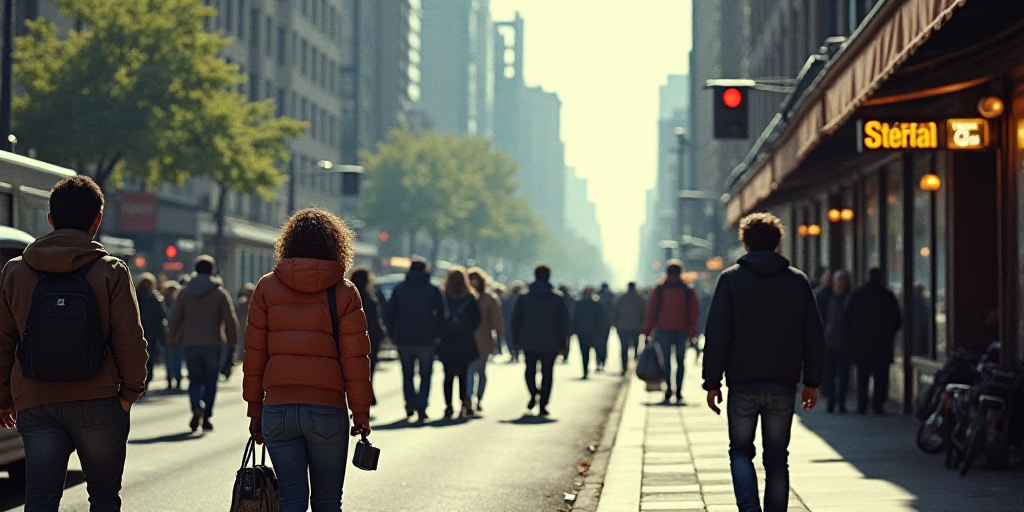
The Urgent Need for Pedestrian Safety in Mexican Cities
Reclaiming public space and enhancing urban life quality is a pressing issue in Mexican cities, particularly to ensure pedestrian safety. Implementing street furniture or repurposing streets can address social, environmental, and mobility challenges faced by major metropolises.
According to the Secretaría de Desarrollo Agrario, Territorial y Urbano (Sedatu) and the Banco Interamericano de Desarrollo (BID), cities concentrate over 80% of the national population, making them strategic points for implementing sustainability and resilience policies.
Alarming Pedestrian Incidents in Mexico City
However, prioritizing pedestrians is urgent. In the second quarter of 2025, there were 1,090 pedestrians injured and 29 fatalities due to traffic incidents in Mexico City, according to the Reporte Trimestral de Hechos de Tránsito of the capital.
Tactical Urbanism: A Rapid, Economical, and Participatory Transformation Strategy
Tactical urbanism emerges as a rapid, economical, and participatory transformation strategy capable of generating changes in mobility, safety, and coexistence.
“Tactical urbanism reminds us that grand infrastructures are not always necessary to change life in cities. Sometimes, small, well-thought actions are enough for residents to take ownership of public spaces,” said Elena González, an expert in Space Design at ESDESIGN.
Moreover, the combination of built infrastructure and vegetation, known as green infrastructure, is one of the most effective tools for mitigating climate change and restoring environmental balance in urban environments.
A New Urbanism: Case Studies in Mexico
González explained that an example of tactical urbanism in Mexico is the pedestrianization of Francisco I. Madero street in the historic center of Mexico City.
Led by the Authority of Public Space, this project emerged in response to the growing pedestrian traffic and the need to connect two key points: Alameda Central and Constitution Square.
The temporary closure of the street in 2009 resulted in a 250% increase in pedestrian traffic, a 50% rise in commercial rents, and a 50% increase in adjacent property values, according to data shared by ESDESIGN.
As a result, Madero became one of the busiest avenues in the country, with around 400,000 pedestrians daily.
Another example is the emerging network of bike lanes in Mexico City, driven by the Secretaría de Movilidad (SEMOVI) and ONU-Habitat within the SNG2030 tactical urbanism program. These interventions aim to connect neighborhoods, reduce travel times, and promote active mobility.
According to the Misión Cero (2025) strategy, over 400 kilometers of bike lanes currently operate in the capital, benefiting more than 300,000 daily cyclists and reducing polluting emissions in high-congestion areas.
Pedestrians at the Center of Urban Planning
Studies by the Instituto de Políticas para el Transporte y el Desarrollo (ITDP México) indicate that promoting active mobility can reduce premature deaths from non-communicable diseases by up to 11%, encouraging healthy habits like walking or cycling.
Additionally, Project for Public Spaces documents that these redesigns can boost local business sales by 20-40%.
“The Mexican case demonstrates how citizen participation and sustainable vision can generate measurable results in a short amount of time,” added González.
For the expert, tactical urbanism not only transforms physical space but also strengthens residents’ perception of safety and belonging, reinforcing community identity and local economic dynamism.
“Tactical urbanism should be accompanied by professional reflection and design to avoid becoming a temporary patch. When properly applied, it can initiate profound and sustainable urban transformations,” emphasized González.
Key Questions and Answers
- What is tactical urbanism? Tactical urbanism is a rapid, economical, and participatory transformation strategy that addresses social, environmental, and mobility challenges in cities through small-scale, well-thought actions.
- Why is prioritizing pedestrians important in Mexican cities? Prioritizing pedestrians is crucial due to alarming traffic incidents, with 1,090 pedestrians injured and 29 fatalities in Mexico City’s second quarter of 2025.
- What are examples of tactical urbanism in Mexico? Examples include the pedestrianization of Francisco I. Madero street and the development of a bike lane network in Mexico City, both promoting active mobility and enhancing urban life quality.
- How does tactical urbanism impact local communities? Tactical urbanism transforms physical space, strengthens residents’ perception of safety and belonging, and reinforces community identity and local economic dynamism.